

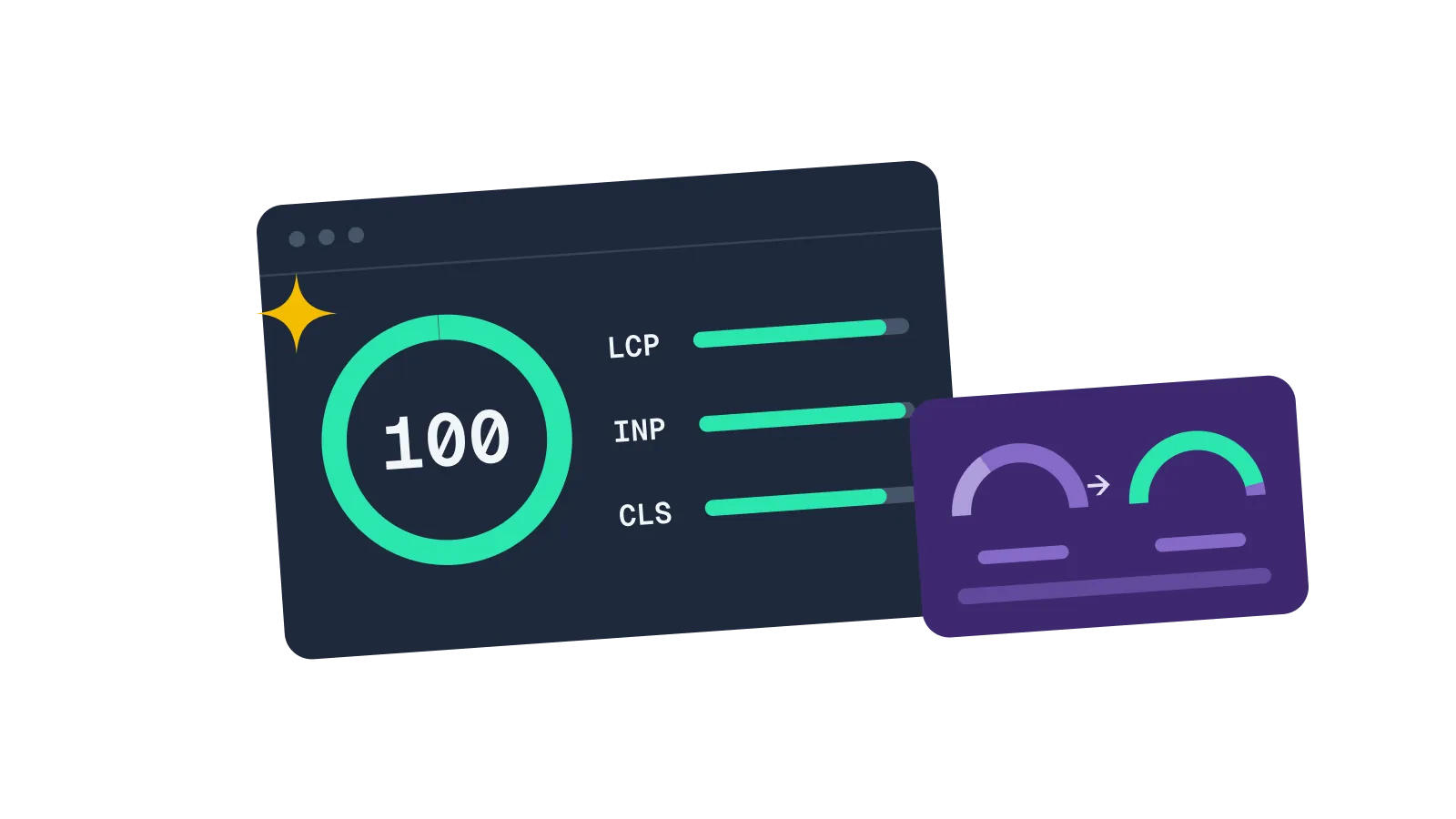
Performance
—
Display and response speed, under the test conditions.
Your site is slow, Search Console flags your Core Web Vitals, or your PageSpeed score no longer moves. We fix the cause at the source, then compare the same pages.
The page takes a while to appear. A tap on the menu doesn’t react right away. Google Search Console sends an alert about Core Web Vitals. A caching plugin sometimes pushes the score back up, but it can break some features, and the gain fades as the site evolves.
Website speed optimization fixes what really weighs the site down: the code, the images, the fonts, the third-party scripts, the server. It also improves perceived speed, what appears first and how the page reacts to a click, for smoother browsing. A layer of caching on an already heavy site only hides the problem.
The test uses Google’s PageSpeed tool. It gives a lab score. Real visits, when Google has them, appear separately.
The address is sent to Google (PageSpeed Insights) for the measurement. This site also loads the page once to read its technical headers (CMS, cache, CDN). Each result is kept for 90 days behind its own link, so you can share it. Nothing is stored in an account or tied to your name.
Results are kept for 90 days.
Mobile
—
Display and response speed, under the test conditions.
—
Automated checks only. A WCAG audit also needs manual tests.
—
Tags, indexing and technical basics seen by the tool. Not your rank in Google.
—
HTTPS, console errors, libraries at risk.
—
—
—
—
—
—
—
Computer
—
Display and response speed, under the test conditions.
—
Automated checks only. A WCAG audit also needs manual tests.
—
Tags, indexing and technical basics seen by the tool. Not your rank in Google.
—
HTTPS, console errors, libraries at risk.
—
—
—
—
—
—
—
Fill out the form to get a quote
“*” indicates required fields
The PageSpeed score is a good benchmark, not the only one. We aim for faster pages for your visitors, starting with the ones that bring in inquiries or sales.

We start from the site as it is, page builder included, and optimize it as far as it goes: unneeded plugins removed, scripts deferred, animations lightened, theme settings reviewed. The problem is fixed, not hidden.
Lighthouse simulates a phone and a connection. Real-world data (CrUX, the Core Web Vitals report) describes your visitors. The two are read together.
A page can appear quickly and still be slow to react when you tap a menu or a button. Google measures that delay with INP (Interaction to Next Paint). Script-heavy sites often suffer from it, even when the display looks fine.
Images, fonts, HTTP caching and hosting are part of the project. With a page builder, a caching plugin is often necessary: we configure it after the fixes, making sure it doesn’t break anything. If your IT team allows it, Cloudflare adds a CDN (content delivery network) and protection in front of the site.
A short project, with the same pages measured at the start and at the end.
Lighthouse and, if available, real-world data for the agreed pages.
Theme, images, fonts, third-party scripts, headers, hosting. Each fix is named.
The same pages, the same conditions, after the fixes.
Forms, cart, menus and tracking tools are tested after each fix: the site gets faster without breaking anything.
Nothing is installed on our side. You keep the hosting and the accounts.
A maintenance plan keeps the site healthy after the optimization: updates, monitoring and performance tracking.

Bilingual redesign, audit before launch, speed optimization and SEO in both languages.
The pages to measure, the host, what must not change.
Lab and real-world data, recorded before any fix.
At the source, on staging, then checked.
The same measurements, afterwards. You see the difference, not just a score.
No. The Lighthouse score changes with the device, the connection and the third-party scripts. We measure the same pages before and after, and we deliver the difference.
Not to make it faster. Most slowdowns come from the theme, the images and the scripts. A redesign is only proposed if the site cannot be fixed.
PageSpeed is a lab test you can run again at will. The Core Web Vitals in the Search Console report describe real Chrome visitors, over 28 days. A site with little traffic often has no real-world data.
From 5 hours, or $625. The final price is a quote based on the starting point: a site that starts far behind often gains a lot in a few hours, while an already optimized site needs fine-tuning, which takes longer.