

Performance
—
Display and response speed, under the test conditions.
Paste an address. Google tests the page on a phone and on a computer, at the same time. The score is a lab test.
Allow 15 to 40 seconds. The address is sent to Google (PageSpeed Insights). The result is kept for 90 days behind its own link. Nothing is tied to your name.
Results are kept for 90 days.
Mobile
—
Display and response speed, under the test conditions.
—
Automated checks only. A WCAG audit also needs manual tests.
—
Tags, indexing and technical basics seen by the tool. Not your rank in Google.
—
HTTPS, console errors, libraries at risk.
—
—
—
—
—
—
—
Computer
—
Display and response speed, under the test conditions.
—
Automated checks only. A WCAG audit also needs manual tests.
—
Tags, indexing and technical basics seen by the tool. Not your rank in Google.
—
HTTPS, console errors, libraries at risk.
—
—
—
—
—
—
—
Fill out the form to get a quote
“*” indicates required fields
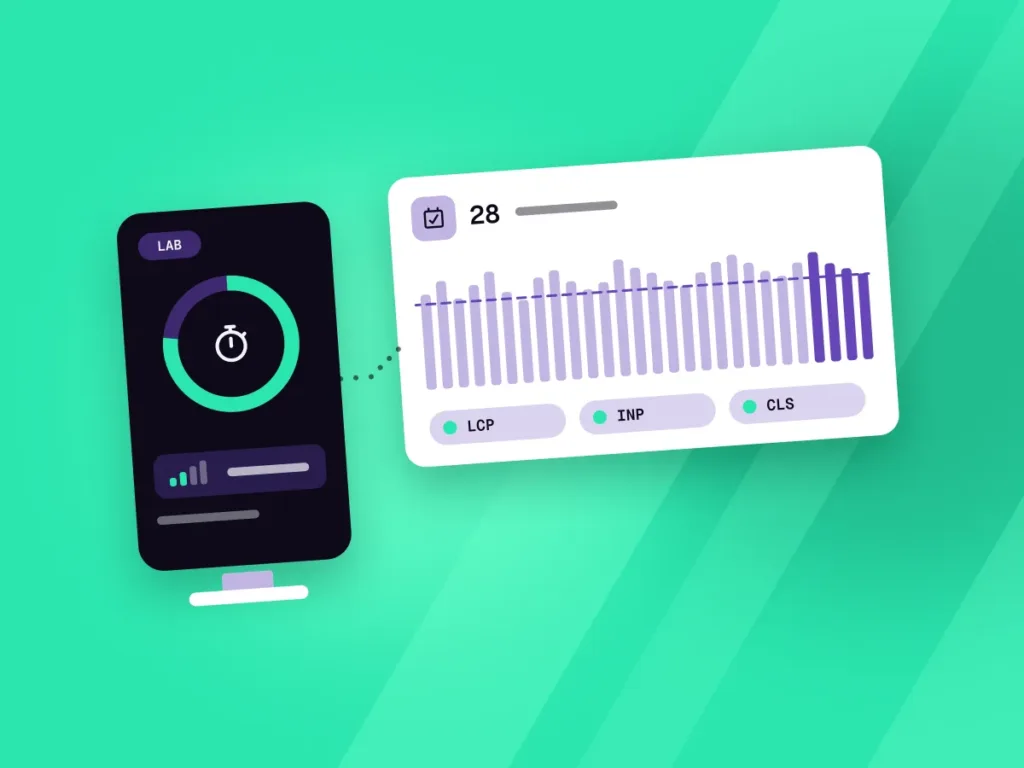
PageSpeed loads the page in a lab: a simulated device and connection, at a given moment. Run the test again, and the score moves. The Core Web Vitals in Search Console, on the other hand, sum up 28 days of Chrome visits.
Both are useful. The lab shows what is heavy in the code. Real visits tell you whether your customers feel it. A site with little traffic often has no real-world data: that is not a failure, just a lack of measurement.
The lab shares its machines and its connection. A slow third-party script, an ad or an image that changes is enough to make the number vary. Look at the metrics, not just the score.
No. It does not change your site and promises no position. It shows technical conditions that Google takes into account.
It is sent to Google for the measurement. The result is kept for 90 days under its own link, so you can share it, then it is deleted. The address is not tied to a name or an email, unless you request a quote with the form.
No. The tool only sees some of the WCAG criteria. Keyboard and screen reader testing is still done manually.
It depends on the starting point. A site that starts far behind often gains a lot in a few hours. An already optimized site needs fine-tuning, which takes longer. The quote starts from your test.